Wednesday, May 31, 2006

Broken English, broken buildings

IT was a perfect killer quake. Just when people thought the danger lies up ahead at grumbling Mount Merapi, the quake suddenly came like a thief in the night, claiming the lives of 5,400 people, and still counting. It happened in Indonesia; it could happen in the Philippines. The question now is—is the Philippines ready?

The Philippines practically suffers a quake each day, almost all of them harmless temblors. The website of the Philippine Institute of Volcanology and Seismology (Phivolcs), however, lists about a dozen destructive earthquakes since the 60s. Among the most prominent of these were the magnitude 7.3 quake in Manila that destroyed Ruby Tower and killed 200 in 1968; as well as the 7.9 Moro Gulf quake that unleashed tsunamis and killed more than 6,000 people. In 1990 another killer quake leveled the summer capital of Baguio City and toppled a school in Cabanatuan City. Is the Philippines ready for another for another big temblor like these ones?

Supposedly, local government units have their disaster coordinating councils tasked to prepare for these disasters and mitigate their impact should they arise. But the recent list of buildings that are considered highly at risk from earthquakes are no cause for comfort. The list indicates that 99 percent of those in the list are school buildings, specifically public school buildings. The list covers Metro Manila, only; we could assume that the situation could be as worse in other densely populated cities outside the National Capital Region. Should another Magnitude 7 temblor—God forbid—occur, school children, most of them sons and daughters of poor families, are the ones that are likely to be affected.

Certainly, addressing natural disasters means that the county should improve its capability for disaster preparedness, mitigation, relief and rehabilitation. The government should also review the country’s building code to determine its relevance to account for changes in urban land use and development. The local government units should play an important role in this process as they are mandated to do comprehensive land use and development planning. But given the situation in the country’s public school system, its rickety buildings and structures, it might be necessary for the government to look at the country’s budget for education from the view of disaster mitigation. This is important considering that the Senate is currently deliberating the 2006 budget.

In its present form, the proposed budget allocates only P5.86 billion for basic educational resources, such as classrooms, teachers, seats, and textbooks. Senator Mar Roxas has noted that this amount is inadequate to close the gaps of 41,197 in classrooms, 10,517 in teachers, 1.5 million in desks, and 41.32 million in textbooks—gaps which DepEd estimates would need P22.88 billion more to complete. Meaning, what is proposed in the budget is just a little over a fourth of what’s needed.

Lately, Sen. Mar Roxas has pushed for the realigning of P9.18 billion from the slashed items to increase the budget of the Department of Education (DepEd), insisting that education and human resource development should take precedence over other State priorities. He said the additional P9.18 billion should go to basic educational resources, teacher training and private school subsidy. The senators would be doing a signal public service, and prove critics wrong that they are an overpaid, useless bunch, by heeding the realignment proposal. It would serve justice if they would also provide specific amounts necessary to refurbish those rickety school buildings.

This is the least that the government could do. If the country’s school system is so challenged fiscally and manpower-wise it cannot teach children proper English—or guarantee basic proficiency needed for today’s jobs, at least the schools should ensure they are not maimed, bruised or killed should another perfect killer quake—heaven’s forbid—happen.

Monday, May 29, 2006

The power of access

EVERYONE seems to know all along that “access” plays an important role in development. It’s almost commonsensical and one couldn’t help but wonder why Philippine policy makers seem not to have figured it out long ago and put the necessary measures well in place. Yes, that’s the sense one gets upon reading the latest study on the “power of access” done by SRI International and funded by Fedex Corporation.

The study defines “access as a means of interaction and exchange among people, businesses and nations” that is critical to economic growth and improving human welfare. Access is viewed in three variables—space, time, and information. Access provides benefits to people, business, and nations by providing them opportunities to participate, choose and improve.

Frederick Smith, Fedex’ chief operating officer, said access enables nations to enter broader markets, gain global linkages, attain national and international cohesion and achieve growth and prosperity. It also boosts the country’s private sector by increasing businesses’ market reach; it facilitates innovation, and creates more opportunities for growth. And more important, access—according to Smith—empowers people, connects them, enhances their well-being and constantly expands their choices in life.

In that study, SRI ranked the Philippines number 65 in 75 countries in its Access Index, just a notch higher than the bottom 10. The same study also computed the opportunities created by Access for each beneficiary group and found that the Philippines ranked 57 in access opportunities for people, 52 for business, and 59 for the entire country. These figures suggest the continuing difficulties suffered by the country in terms of access to goods, services, ideas, information and opportunities.

Specifically, it means that Filipinos—compared to most other Asians—have fewer choices in terms of products and services, education and training, job opportunities, information and financial resources; and personal and professional networks. It means Philippine businesses have less access to customers and inputs, information, financial resources, technologies, and new business models. And the country in general lacks access to global supplies and markets, investments, information and financial resources, and technology and innovation.

It’s not so easy to figure out why. For so long, policy makers have not been investing in much-needed economic and social infrastructure such that producers are unable to bring goods and services to local and international markets cheaply and on time. The roads are bad, the ports are inefficiently run, and the country’s water transport systems are oligopolistic, thus making the transport of basic commodities like cereals from Mindanao much more expensive than bringing them to Metro Manila from Argentina.

To remedy this problem, Congress had enacted laws to allow private sector participation in infrastructure development through build-operative-transfer and similar schemes, yet these policies never took off, as bureaucrats used the said policy instrument for corruption and rent-seeking. The Naia Terminal 3 is the latest monument to such gallery of shame, turning off a lot of investors who were initially willing to build important economic infrastructure for us.

Information technology, particularly broadband Internet, supposedly promises to be a social equalizer. But right now, the penetration of broadband Internet has yet to transcend beyond the Cybercafe and middleclass villages. It appears that cost is a major consideration (the cheapest broadband is about a thousand pesos a month). The real reason probably is that there are only a few providers in country and given this oligopolistic situation, there seems to be no compulsion among these providers to reach the masses.

Breaking the digital divide is the key, but it seems telecom providers would rather roll out the more profitable gizmos like the 3G, unmindful of the fact that these new technologies would likely heighten digital divide and deny access to the larger masses of the population.

Solution? Try putting foreign competition in the business and surely, this problem of limited access will disappear in just a year or two. Greater competition, through greater openness to foreign investments is the key, just like what China is doing. The same could be said of the country’s interisland shipping industry. And of course, the government should come up with a comprehensive public investment program to address the country’s strategic infrastructure requirements. Lately, the government has been boasting about the “dividends” provided by the EVAT. Let’s mobilize this resource, preferably complimented by foreign grants, to enhance access once and for all in order to lift this country out of underdevelopment and poverty. The government should not dilly-dally, for access delayed is social justice denied.

Thursday, May 25, 2006

End of Pinoy bloggers' age of innocence?

Oh how bloggers love their blogs! It’s no brainer why: it’s the only kind of “media” where the writer is also the editor, the cost of “publishing” is nil, where one’s chip on the shoulder is a virtue, and where the writer could pour out venom as much as his or her sense of decency—or lack or it—would allow. In the blogosphere, the Queensberry rule is off as bloggers believe laws on libel and defamation don’t apply to their spontaneous and free-spirit world.

Or so they thought.

But increasingly, lots of bloggers are getting lawsuits and penalized in the United States and the UK for calling people “lard brain” or “sex offender” or “Nazi.” Recently, members of the Yuchengo group of companies filed a libel charge against a group of plan holders, raising fears that the age of innocence for Filipino bloggers has ended.

Is freedom of expression by ordinary citizens in its barest, rawest form made possible by new technology now under threat? Are we seeing the end of the blog as we know it?

According to legal experts say that in the Philippines libel and defamation suits against bloggers are still a long shot. The statute books on libel and defamation were done when long ago when blogging was unheard of. Lawyer Jose Bernas (Bernas Law Office) says the law usually plays catch up to technology so bloggers are still safe. It takes a lot more for the blogger doing his thing beside the water dispenser to get the calaboose—at least for now.

More than just the dirty words
“Libel is not committed simply because a derogatory statement is made,” says Bernas. “There are other elements to be ascertained. One of them is publication or circulation. It is not clear that blogs meet the current definition of publication since actually blogs are static and readers ‘visit’ the blogs website instead of blogs circulating or publishing their journals. Technically therefore, it will be an effort to prove publication.”

For libel to succeed, Bernas say, the plaintiff or the accuser has to prove malice, or the desire to cause pain, injury, or distress to an offended party. He said that statements made to a private audience, however, are qualified privilege and are not considered public circulation.

“So the intended audience of the blogger is also to be evaluated,” said Bernas. “If the statement was made only for the association, it may be protected by privilege and may not be considered libelous.”

Are blogs private or public means of communication? This is a dilemma because blogs emerged in a specific cultural context where the private and the public spheres are getting blurred because of technological change.

At the surface, it looks public because anybody who knows the blogs’ URL (uniform resource locator) could access, read, and post comments in them. Quoting Clay Calvert, author of Voyeur Nation: Media, Privacy and Peering in Modern Culture, Caroline Miller of the University of North Carolina State University say that blogs serve four basic purposes including self clarification (who am I?), self validation (how do my views fit within society’s sets of values?), relationship development (building an online community), and social control (influencing other people’s views through the blogger’s revelations). The first two purposes necessary reflect blogs as private activity while the last two portray blogs as intended for public audience.

“Blogs are part of World Wide Web, the most accessible protocol of the Internet which is also called the new media,” says Danilo Arao, assistant professor of University of the Philippines’ Department of Journalism. “The World Wide Web by itself is acknowledged to have websites that are publicly accessible. These are channels used for ‘mass communication’ due to their wide reach and anonymous audiences. Blogs are part of publicly accessible websites and as channels for mass communication so they can be termed ‘mass media.’ For as along as the content of blogs are publicly available, they are classified as mass media.”

Not established
Bernas, however, thinks otherwise. The rules on mass media, he said, are evolving and have not been established. Blogs, he said, is neither part of electronic media because it doesn’t use the air waves which are a public resource. It’s not a newspaper either because it doesn’t circulate like one.

“I would not consider it mass media at this time because the degree of deliberateness or intent possessed by the blogger, and the blogger’s ability to carry out the circulation himself does not approximate those that you see in mass media,” he said. “The blogger simply allows his site to be visited while the producer of mass media makes an effort to bring to the ‘masses’ his content.”

In his paper entitled Libel in the Blogosphere: Some Preliminary Thoughts, Glenn Harland Reynolds, professor of law at the University of Tennessee, and blogger behind the Instapundit.com says that bloggers usually are not likely to put defamatory content on their own blogs but rather their readers through comments, and emails. Under American law, bloggers are immune from liability for these contents as they are protected by Article 230 of the Communications Decency Act. In the Philippines, there is no equivalent statute but Bernas says bloggers’ protection lies in the question whether or not the blogger is a “publisher.”

“The heart of that issue has to do whether the communications are ‘private’ in the sense that these are not circulated to the masses like mass media,” stresses Bernas. “If these are private, and are not ‘circulated’ to third parties, it will be difficult to prosecute a case of libel as defined presently. The reality is that laws always play catch up to technology.”

Freedom incomplete
So does it mean that bloggers has the completed freedom from lawsuits? Does it mean that they could just malign anybody they fancy to attack? Not really. Bernas said offended parties could always resort to civil action.

“A civil action need not measure up to the strict definitions of criminal libel,” said Bernas. “If you can prove actual damage to your reputation that can be quantified then you can sue for damages. However our courts do not usually award large amounts for damages. That would depend on the reputation of the complainant to begin with and whether that reputation was actually damaged.”

He adds that in other countries, damages need not be proved when certain defamatory statements like attacks on chastity, professional work or reputation are uttered. “The court can award nominal damages because it is assumed that such damage was suffered.”

That’s what exactly is happening in West lately. In January this year, the court in Forsyth country (US) ordered David Milum, an internet muckraker and political activist, to pay lawyer Rafe Banks $50,000 for accusing him of “delivering bribes for drug dealers” to a judge. In March (2006), the court in the United Kingdom slapped a Yahoo user £17,200 fine for calling a politician “lard brain” and “Nazi.” In the US, there is currently a growing list of lawsuits against bloggers for various charges ranging from publication of trade secrets to a fraudulent acquisition of a sex.com domain.

In general, Reynolds says that it’s unlikely that bloggers are going to be swamped with lawsuits because of certain factors, one of them the ease with which to correct factual errors. “When errors of fact are pointed out, most bloggers correct them immediately and generally do so with the same degree of prominence as the original error,” he said. “This practice makes libel suits less likely, and would arguably serve as evidence of absence of malice.”

“The ideal defendant, from a libel plaintiff’s standpoint, would be a rich blogger who has done significant original factual reporting as opposed to merely posting opinion or links to and quotes from other sites,” he said in his paper. “Such individuals are quite rare, at present. Most bloggers focus on opinion and most bloggers are not wealthy. This may change, however, as the blogosphere matures.”

Blogs evolving
And maturing fast they are. Five years ago, blogs are purely diaries of individuals who write about their angst, pets, failed relationships, and their rose gardens. These days blogs, social networking platforms, and websites are fast taking on business models, carrying advertisements and syndicated posts to make money. Global blogging networks have also emerged, carrying blogs on specific gadgets and technologies written by writers all over the world, mimicking how news wires work. Because of these recent trends in blogging, Justin Levine, a lawyer and blogger who writes for a law blog calblog.com expects a “legal superstorm against bloggers” as the social impact of blogging rises.

“It won’t just be libel (though that will certainly be a strong weapon in the anti-blogging arsenal), it will also be the recent convergence of copyright, trademark, publicity rights, and trade secret claims that have converged in recent years to make free speech an ephemeral notion,” Levin said.

The libel case filed by the Yuchengco group against the plan of Pacific Plans who are not media practitioners therefore is the first in the Philippines. (The first one was filed by a certain Jonathan Tiongco against the Philippine Center for Investigative Journalism). Whatever the outcome of the legal action against that group of bloggers would set a precedent in Philippine jurisprudence.

But how would mainstream media react to this possible ‘super storm’ of lawsuits against bloggers would be interesting. Blogging, because of the absence of editorial control and the gravitas of organized media, is still considered “low-trust culture.” Some professional journalists, especially those who are not into it, see blogging as dangerous as it grants ordinary citizens without formal journalistic training with more or the same power to influence public opinion. There are views that blogging should eventually have certain professional standards and code of ethics to follow.

Arao, however, dispute this view stressing that the practice of the media profession, and blogging should never be legislated.

“Theoretically, bloggers should maintain the same discipline and ethical standards as journalists from the so-called traditional forms of mass media,” said Arao. “However, not all bloggers are journalists, as in the case of those who mainly write about fluff and existential angst. I can even say that not all bloggers are good writers. I think self-regulation is the key.”

“I don’t think you can apply the same standards because the infrastructures are different, say Bernas. “Additionally, it will not be cost effective to maintain the same standards. Again, one must not forget that people still think that the essence of the internet is its unregulated state. No law can change what people think overnight so until people view the Internet differently and begin to think that it should be regulated, no law in that regard will be passed or, if passed, can be enforced.”

Wednesday, May 24, 2006

Job creation: every thing starts with the schools!

MEMBERS of the Employers Confederation of the Philippines, closing their national conference on Tuesday, vowed to work with the Philippine government to “improve the match between jobs and skills” in the country. Specifically, Ecop proposed that both parties conduct an inventory of skills critically needed by the nation and identified priorities as certain job-rich industries including cyberservices, agribusiness, health services, mining, creative industries, hotels and restaurants, medical tourism, aviation and maritime sectors.

This is the best thing both parties could do to address joblessness in the country. For far too long, analysts have been crying about jobless growth in the country, until it recently became apparent that jobs are being created yet there are few takers because graduates don’t have the qualifications. Ecop, however, should go beyond skills inventory to address the problem. That effort only addresses the question of labor supply. Ecop has access to information on labor requirements of companies all over the country. The group, therefore, should complement this effort by providing information on labor demand. The idea here is the setting up of an efficient labor market information system down to the regional level so that parents and students would be guided in making career decisions. Right now, high school students don’t have any idea what to take up in college. They rely largely on the advice of their parents, neighbors, and relatives who are themselves ignorant of the labor market conditions.

We suggest that the private sector work more with the schools and universities. Lacking a good labor market information system to guide them, most schools are also at a loss as to what sort of disciplines and curricula to offer—part of the reason why most of them end up as diploma mills. The best thing the employers could do is sit down with these schools, examine their course offerings and tell them what exactly are the skills needed by the work place so that graduates would not have a hard time doing their transition from school to work. The country’s telecommunications and cyberservices industries have started to do this with selected schools in Metro Manila and Calabarzon. We suggest that the government help institutionalize these linkages between work places and the universities down to the regional level as well.

For its part, the government—especially the Department of Education and the Commission on Higher Education—should take a hard look at the country’s educational system, especially in view of the rapidly globalizing world. Is the country’s educational system attuned to the demands of the brave new world?

We suspect the contrary because of the continuing weakness of most graduates in the sciences, mathematics and the English language. These kinds of disciplines require lots of lecture hours, laboratory work and focus to ensure mastery. But mastery our students couldn’t achieve because of the often crowded curricula.

Elementary and high school students, for instance, have more than a dozen subjects each day. Students, therefore, end up too pressured to cope with so many subjects, and often barely have the time or energy for those subjects that really matter in the real world. Added pressures are the tendency of school officials to use students as props and mass dancers during fiestas, visits of dignitaries, and athletic events. Ditto the practice of mobilizing teachers to perform election-related duties and responsibilities. Do we want a lean and mean school system? We start with a lean and mean school curriculum for elementary and high schools.

We need to do all these measures quick because globalization suggests that the world now is the market place for skilled Filipinos. Right now, skills in certain industries like aviation, nursing, caregiving, mining, aircraft mechanics are getting scarce because of strong global demand. Many employers in these sectors are now so desperate some have suggested a ban on the export of skilled labor from these industries. But we know that these measures are not going to work. The only surefire formula is producing enough workers both for the local and global job markets and the first step is the country’s school system.

If you have any doubt about this, check out the latest special report by the New York Times on why America, while cracking down on illegal immigration, is throwing wide open the doors to nurses from foreign countries, with development experts worrying about the impact of these on countries like the Philippines and India.

For the longest time many of us nurtured the well-worn notion that “whites like brown nurses because white young men and women don’t like to clean ass.” Well, it turns out that smart-alecky, not to mention insulting (to both races) generalization is debunked by the NYT finding that America is seriously in short supply of nurses because its leaders have for years ignored advice to support nursing schools and the teaching of nursing. Each year, the US’s nursing schools turn away hundreds of thousands of applicants, indicating that many youths over there are interested in the profession but there’s no conscious effort to provide the schools and teaching hospitals for them. Many end up taking courses in the Carribean or some such similar destination. On the other extreme, Filipinos are so eager to produce nurses for the world that our computer and engineering schools have reinvented themselves as nursing schools.

Either way, this mismatch of demand and supply between First World and Third World isn’t good for both in the long term. One (USA) can be so dependent on foreign workers that, who knows, the day will come the supply of workers will be treated much like a commodity, say, like the gas pipelines that Russia cut off to the Ukraine earlier this year in a bitter dispute over pricing and transit terms. Conversely, the labor-supplying countries can also be held hostage to threats of rejection of their workers if they can’t agree with host governments on certain terms.

From a globalist viewpoint, that’s a “function of the market.” But from the national interest of each country, it’s clear both the labor supplier and labor importer need to rationalize their internal job matching systems: and for either one, schools hold the key to good business.

Monday, May 15, 2006

‘You pee, you pay’

THE Bureau of Internal Revenue has a lot of explaining to do. And the sooner it does so honestly, the better. The questions here are the following: Why the sudden shortfall in the April? Is there really a connivance between certain BIR officials and their clients among the country’s large taxpayers as insinuated by Albay Representative Joey Salceda? What specific steps are being done by the BIR leadership to address the problem?

People are demanding these explanations because so far, the BIR has not done enough to come to grips with the issue. Supposedly, among the reasons that caused an P18.35- billion decline in collection are the following: huge tax payments in the first three quarters of 2005 resulting in smaller last-quarter payment; and that many companies suffered reduced sales, hence the reduced taxes. BIR is telling us that suddenly taxpayers have become so diligent they started paying early. However they were losing money so they paid less tax. Business is hard, BIR is telling us.

There is something wrong with this explanation because the same data sheets from the BIR also told us that government netted P9.52 billion from the “increase in income taxpayers with increases in sales/gross receipts.”

So business after all is not bad. It should not be because in the same period, government collections from the value added tax rose 75.51 percent, indicating that people are indeed still spending their money while complaining about higher VAT, and lots of businesses are funneling the sales profits straight into their cash registers and their bloated bank accounts. Business should be good because, thanks to favorable weather, the farming and agribusiness sectors are having a field day. Business should be good because our overseas workers are still sending in dollars as if there’s no tomorrow. Business should be good because exports are recovering, posting a 25 percent jump in April. And of course, the outsourcing companies, including call centers, are pumping in lots of money in the economy. In 2005, they made more than US$2 billion dollars and their combined payroll, our own back of envelope computations show, could reach as high as P5 billion a month.

Our only problem is that many of those who made tons of money did not pay the right amount to taxes. Who are they? Representative Salceda says they are the large taxpayers, including businesses, and the professionals. The BIR figures reveal this as well. While the VAT collections rose 75 percent, income taxes from large taxpayers rose only by 3 percent, causing a 19-percent shortfall vis-à-vis BIR’s targets for income tax.

“Corporates, sensing the improved collections from consumers would provide the numerical shield, just unleashed an army of tax experts using all devices to avoid taxes in conspiracy with corrupt BIR bureaucrats,” Salceda said, and we suspect the same. BIR should explain this long and hard. And perhaps, heads should roll.

Many of us taxpayers may have noticed the sudden jump in our water and electricity bills this month. And we attribute this to the reformed VAT, a bitter pill we are told by government as something that we should swallow so the country’s finances will improve. We need the “reformed” VAT, the government told us, so that our tycoons and big businesses will have access to cheaper funds resulting from improved sovereign ratings. And we acceded, not knowing that higher VAT collections could only be abused—if Salceda’s suspicion is correct—in order to mask underperformance or worse, “areglohan” or fixing in other areas of collection.

In short, he complained, consumers have been used as the shield for the bigger taxpayers—yes, the same overburdened public that has been shackled to a tax system that won’t allow fixed-income earners any respite but does not have the creativity or the will or the determination and guts to run after those who for years have paid puny taxes while gobbling huge profits.

One fixed-income reporter who spent a fortune on a relative’s recent surgery said it so well when, seeing the VAT on his receipt for a bedpan, quipped, “Oh, so it has come to this. You pee, you pay.” Reminds one of that jeepney sticker that says “jingle lang ang pahinga (we only break for urinating).” But here, one sees there’s no respite from paying taxes—and worse, after breaking one’s back paying them, one hears the government saying it fell short of collection goal.

The BIR, nay the government as whole, should fix these leaks, otherwise, as we had warned earlier in this same space, more people will be disillusioned and will rationalize not paying the correct taxes, or not paying at all. Fearing that corrupt officials might just pocket their tax payments, small business might just be tempted to go underground or cheat on their taxes. And if everybody would have this mentality, we are going to wake up one day suffering the worst fiscal crisis borne out of people’s total lack of trust of the BIR.

Wednesday, May 10, 2006

Skills-jobs mismatch

WE have been talking about “jobless growth,” about how the economy has been growing decently at 5 percent or higher in the last few years and yet the country couldn’t seem to lick joblessness.

Each analyst has his or her explanation: high population growth, the concentration of new jobs in the services sector requiring stringent qualifications, the capital intensity of investments owing to a fiscal incentive regime that cheapens capital vis-à-vis labor, the economy’s inability to grow enough to produce more jobs, etcetera. All these explanations make sense and for decades, the practitioners of the dismal science (the economists) have been pontificating about them in their “empirical studies.” The recent job fairs in Davao, however, seem to indicate that the real reason might be job mismatch. The country’s college and universities are not producing graduates that the industries and institutions needed.

Consider this: In the April 28-May 1 jobs fair in Davao City, companies offered 10,000 jobs, yet the DOLE got only 5,000 applications. Out of 10,000 jobs offered, 7000 were overseas jobs and the rest local jobs. Yet only 1,800 applied for those jobs abroad. We thought all along the problem was lack of jobs!

The Davao job fair results very possibly mirror the national situation. From the 2006 to 2010, for instance, the Commission for Information and Communications Technology (CICT) projects that the country’s “cyberservices” industry—comprising call centers, medical and legal transcription, software development, engineering design, animation, and back-office operations—projects a labor supply shortfall of 273,000 unless the government and the private sector can do something drastic to address it soon. In a country perennially suffering from severe joblessness, this labor supply shortfall is almost criminal.

It’s so easy to blame the parents or the schools for this problem. It’s so easy to figure out how parents are not providing enough guidance to their children as to what sort of career would ensure a better life for them. It would be so convenient to blame schools, nay diploma mills, for mass-producing poorly trained hordes of quasi-educated graduates like the Model T Ford. After all there are too many of these schools around, offering accountancy degrees for graduates that couldn’t pass the board exams, engineering graduates who don’t know engineering, and lawyers who can’t write decent pleadings. Certainly, these schools should shape up and fast. We think, however, that this issue is just one side of the coin.

The other side lies in the failure of the government, specifically the Department of Labor and Employment, to provide adequate job market information by which parents and their children make career decisions. Certainly, greed among diploma mills and the overpriced schools are a scourge but if school administrators have adequate labor market information to guide their course offering and school curricula, the problem of job mismatch would be solved. Besides, students who are well aware of the job market are going to enroll in courses that would land them the hot jobs that they desire, thereby forcing the schools to offer the right mix of disciplines. In sum, the interaction of supply and demand for labor is not functioning well in the country for lack of job market information.

And whose job is it to provide this information? The mass media comprising print, broadcast and online, should help and indeed it’s playing this function well through the regular classifieds sections. In the Philippine context, however, the reach of mass media is still limited, especially for print and online media. Broadcast may have the potential to reach a wider audience but these institutions whose revenues are determined by advertising hours are not likely to offer systematic and processed information about the job market. Only the government, therefore, given its powers and resources, should be able to provide this information and yet it’s not doing it systematically. But how could the government perform this function?

There are many ways, besides the usual job fairs, skills development, training, and upgrading of the educational system. In the United States, for instance, the Department of Labor provides an “Occupational Outlook Handbook” that provides details of jobs available in the US and their prospects. Specifically, the handbook describes the nature of work; working conditions; training, other qualifications, and advancement, job outlook, earnings, related occupations, and sources of additional information. This handbook is widely available to all Americans, and is regularly updated such that Americans can derive inputs in making career decisions as times and trends change. Certainly, the Philippines, which sets great store on its people as a major economic resource making up for lean capital, should have something like this. The better the DOLE considers doing this, the better.

Monday, May 08, 2006

Nature pulls in weight for growth

THE advertisements for call centers and other outsourcing firms are still flooding media but don’t expect them to be the superstar this year. This year the credit for boosting economic growth will probably come from the farm sector, at least if the latest rice and corn production estimate is right on cue.

The latest buzz among officials of the agriculture department says that in the first quarter, rice production grew by 7.6 percent, corn by 35 percent, thus lifting up the entire farm sector to a 4.7-4.8 percent growth rate. This is not surprising because these two crops alone account for about 22 percent of the total value of the country’s farm output. Certainly, nature is playing its hand here as adequate rainfall resulting from a mild La Niña has encouraged farmers to plant more agricultural crops, particularly rice and corn. This piece of good news suggests that Filipinos will probably enjoy relatively stable prices of cereals as well as chicken and pork, as corn is a major input in the manufacture of fees for poultry and hogs.

This early pundits are already revising their forecasts for the year. Bank of America recently said the Philippine economy will probably grow by 5.3 percent this year, up from its old forecast of 4.7 percent. The bank said the country’s economy may have expanded 5.6 percent in the first quarter.

This is certainly a happy story for the economy which has been battered by rising international crude prices and the inability of the country’s outsourcing industry to soar even higher because of the worsening labor supply shortfalls. From 2006 to 2010, industry leaders fear the outsourcing industry may suffer a labor shortfall of 273,000 workers unless the government and the private sector come up with a drastic solution.

Right now, even the foreign chambers of commerce (European and American Chambers) are rallying behind the industry by launching an “English is cool!” campaign intended to restore the importance and prestige of the English language in our schools, homes, and society in general. We are now seeing positive initial results, but it’s really too early to tell whether or not we can hurdle the big challenge for the outsourcing industry.

The telecommunications industry has lately been abuzz with the introduction of the third-generation phones, another happy story at the surface but this development may suggest that telcos like Globe and Smart are probably hitting the frontiers of cell phone penetration. They needed a new push, hence the introduction of 3G. But its obvious that 3G phones, owing to high costs, is not likely to take the country by storm.

There is still the manufacturing sector, especially the manufacturers of food and beverage that are raking in the money from disposable incomes, courtesy of the remittance dollars, but it appears that higher inflation rates are forcing many Filipinos into saving their money. That explains why the average capacity utilization of the country’s manufacturing sector appears to have hit a plateau at 80 percent. That is still a decent figure but it means that the sector is not pushing significantly forward, probably because the country’s export sector is not shifting to a higher gear.

The whole point here is that the economy now needs a new source of growth and agriculture’s initial figures came just in time. It’s something that we should be happy about because these encouraging results came at a time when the government simply was not spending enough money to revive the countryside. When farm output expands significantly, broad-based growth ensues, benefiting the countryside, providing more money in the pockets of farmers and agri-entrepreneurs, and enabling them to buy the basic stuff produced by factories, and giving them more resources to send their children to school.

Of course, this is pure luck. Or you may call it Divine mercy because these higher growth figures from the farms have much more to do with nature. The pursuit of “fiscal consolidation” has meant that government has not been providing enough money for the operations and maintenance, much less for capital expenditures that should include economic infrastructure in the countryside. Some credit, though, should go to Agriculture Decretary Domingo Panganiban because of his timely use of “clustering” in corn production that enabled the Department to deliver much-needed farm support at the right time despite limited resources and constraints in rural infrastructure. But the entire show is really about favorable weather.

Which proves our point one more time that the future of the country really lies in broad-based growth where most sectors are contributing to expansion of the entire economic pie. In the last several years, government economic planners and some of their supporters in the academe have been hammering on service-driven growth as something that could save this country from perdition. The services sector certainly has been propping up the economy, but its job-creation capability has been benefiting the urban centers only. Enough of this. We should go back to the basics and do what we always know is the right approach: that the farms, the factories, and services all need to grow together so the economy will bestow the greatest benefit to the greatest number.

Tuesday, May 02, 2006

Reinventing the labor union

AS expected, labor organizations nationwide—especially those associated with the left shade of the political spectrum—came out in droves for the Labor Day march, shouting the usual demands, issuing the same statements, and waving the same old yellow-red banners. And predictably, the President of the country went out on TV proclaiming the usual platitudes about workers and some “nonwage” benefits.

A day after, workers are back to the salt mines, to their usual struggling lives as if nothing has happened or will happen, the passionate marches in the streets notwithstanding. For generations, they have been repeating the same routine every Labor Day until the comemorations seem to have lost their meaning.

This week’s Labor Day celebration, however, is somewhat different, signifying that fresh winds of change are currently blowing on the labor movement. No, we can’t see those creeping changes from the usual marches and breast-beating. The signs are in the recent jobs fair held by the Trade Union Congress of the Philippines (TUCP) at the Quezon City Hall as its way of celebrating the workers’ day, and the day before that, another one sponsored by the Manila city authorities in collaboration with private business at the Luneta Park. Asked about their novel way of celebrating Labor Day, TUCP spokesman Alex Aguilar said: “For us, the priority is Trabaho Muna [Work first]… It’s not because we belong to organized labor that we will only focus our energies on organized labor. I think we should also address the needs of those looking for jobs. Remember, we have three million people who have no work.”

This is a refreshing change in perspective from the labor movement that for long had largely focused attention on the country’s organized labor—the labor aristocracy. It’s been called a “labor aristocracy” because the number of workers that these unions represents hardly make up 4 percent or less of the country’s work force. It’s from this attitude that sprung anti-economic growth and anti-business statements of many labor organizations, denouncing foreign investors as “exploitative,” opposing labor policy reforms aimed at making the labor market supply and demand less rigid, conducting crippling do-or-die workers’ strikes, and lobbying Congress for nationwide across-the-board wage increases that benefit only a minute percentage of the working class (the union members) and injured hundreds of thousands of small and micro enterprises that make up the backbone of the economy.

This change in perspective, therefore, would suggest that more labor leaders are now more receptive of progrowth policies that create more jobs, that they no longer look at capital as the “enemy of the working class,” and that labor could actually be a partner of entrepreneurs in building a better and prosperous Philippines.

TUCP, of course, has always been a “moderate union” whose activism has always been tempered by economic and social realities, albeit it has been subjected to some unflattering remarks in the Marcos past, if only because its leaders were always there at the official celebrations of Labor Day. But we believe that other unions may actually have to take cues from it because of globalization, a potent economic and social force that is now currently shaping the workplace and is marginalizing labor unions in general. In the Philippines, globalization has been associated with several trends that are slowly making labor unionism less relevant to the new types of workers.

One could cite three major currents that are affecting the labor movement.

One, liberalization of global trade suggests that factories, more than ever, are dead serious about efficiency and competitiveness, thus forcing them to maintain lean and mean operations. These companies achieve this efficiency by computerization, downsizing, outsourcing, and by focusing on their core competences. Many have relocated away from Metro Manila to special economic zones in Calabarzon and secondary urban centers where the environment are less ideal for labor organizing. Given the rigidity of the country’s labor policies, these companies would rather focus on recruiting and holding on to skilled workers—empowered workers who have less need of services from labor centers.

Two, in the last decade, economic growth has largely been buttressed by the rapid growth of the service sector, specifically banking, telecommunications, outsourcing, and business services. These types of economic activities require urban-based and tech-savvy workers whose idea of “job security” is something that comes from their education and training and not the collective bargaining agreement.

Three, a significant percentage of the country’s labor force that are contributing significantly to the economy are overseas workers—nurses, aircraft mechanics, pilots, health professionals, caregivers, ship crews—and are beyond the reach of the traditional labor organizations.

How labor organizations reinvent themselves to cope with these undercurrents to remain relevant to the working class would depend largely on how they would adapt to these new labor dynamics. Essentially, increasing the base of the working class locally through economic growth and job expansion is one approach. So are providing skills training and job placement programs for workers, for instance, nurses and seafarers. They may also consider engaging poverty reduction as well as the development of small and medium enterprises. These are not the usual stuff that labor organizations do. But then again, this is a brave new world where they need to try new things to stay relevant to the needs of the less fortunate whose interest they deem to serve. Otherwise, unions might just drift into obscurity.

As singer-songwriter Bob Dylan would put it:

The line it is drawn, the curse it is cast
The slow one now, will later be fast
As the present now, will later be past
The order is rapidly fadin'.
And the first one now will later be last
For the times they are a-changin'.

Rediscovering connectivity through Multiply

If one or more of your blogging friends are now using Multiply.com as their new platform, you should not wonder why. These days, Pinoy [Filipinos] Multiply users worldwide are multiplying and are rediscovering the new meaning of connectivity.

“I believe that Multiply redefined blogging for many Pinoys. Filipinos are known for being family oriented and social butterflies,” says Verner Marcaida (http://truejedi.multiply.com), a civil engineering student of the San Francisco State University, USA. “Many of our family members or friends are either home in the Philippines or have migrated to other countries or are working abroad. Multiply enables us to bridge that gap and we're able to keep in touch despite of physical distance.”

Multiply is one of the latest blogging platforms that surfaced since Blogger.com emerged in 1999 to revolutionize the weblog. Multiply is more than just blogs. It’s a complete web site where anybody who could type could easily set up an account and upload and share photos, reviews (books, movies, restaurants, anything), videos, classifieds, links, recipes, and music. Launched only in March 2004, the company learned from the limitations of the most blogging and social networking formats by incorporating all the functions and capabilities that many bloggers are crazy about.

Bloggers usually tend to have several blogs and platforms. A typical blogger would have one for his personal musings using Blogger.com or Wordpress, one for photos using Flickr.com, and another platform for book or movie reviews. The same person may also have either Friendster or Myspace account for social networking and sharing of videos, and photos and music. These networking platforms usually have an internal email that allows the networks of users to easily communicate with each other. With Multiply, one could have all these functions just under one roof.

And more. Multiply’s founders have seen something that others have failed to see—people’s need for certain levels of intimacy or closeness.

“We founded Multiply.com with the belief that there was a more meaningful use of social networks than just meeting people which is primarily what most other social networking sites are for,” says Michael Gersh, Multiply, Inc., vice president for sales and marketing through an e-mail interview. “Rather than have a site designed for building your network, we felt that focusing on your real-world social network would provide a great forum for actually communicating, sharing photos, videos and blogs, and keeping in touch with people you actually truly know, directly or indirectly, and that actually care about you and your life.”

“Prior to Multiply, I've used different platforms to keep in touch with friends and family back home: Friendster, Xanga, Blogspot, Myspace, Facebook, just to name a few” says Marcaida. “Each platform offers a different role, one mainly for blogging, one for photo sharing, the other for meeting new friends, while a couple of these platforms tried to combine these roles. Multiply has made all these so much easier into one platform.”

It appears that many of those who are using Multiply are bloggers who are frustrated with the thought that only few people are reading their blogs. Unless, a blogger is famous, and has gathered enough “fan base”, she or he could hardly attract readers. Millions of blogs are updated each day without getting read. And those people who do read blogs don’t bother to post comments. Multiply tries to address this “problem.”

Carla (http://moncie1102.multiply.com), a Fil-Am student at Oakton Community College in Des Plaines, Illinois (USA) says she used to blog at Blogger.com but she stopped after her brother introduced her to Multiply. After establishing her own network of contacts who are also Multiply users, she is now happily interacting with them. “There are really only a few who know I had a blog. “Unless you ask someone to link you on their blogs, they wouldn’t be able to know you have one.”

“Blogging on other sites or other blogging platforms is more about sharing things with everyone out there, the public at large, people you don't really know. The reality is very few of the people you are most interested in seeing your blog reads it,” notes Gersh.

He explains that on Multiply, when you add a blog entry, a notification is sent to people in the network via its unique social-network based message board, and when somebody adds a comment to your blog the message board also updates.

“Most of my friends use this site now. Not just the ones in the Philippines, but in every corner of the globe,” says Marcaida. “A couple of my cousins who serves in the US Navy uses Multiply to communicate with us how they are doing. I was also able to get in contact with a number of friends whom I haven't seen since grade school through the close knit network or contacts of other friends in Multiply. Whether family from Manila or friends from Bucharest, online blog sites enable us to keep in touch. Multiply is that vehicle that makes it so much easier to do so.”

Multiply—just like most blogging and social networking platforms—is free. People who prefer bigger bandwidth and flexibility, however, may upgrade to a paid account where they could customize and personalize their sites.

“I’ve been blogging for years now, but I never encounter such blog sites that give you these much options—blogs, photos, reviews, videos, and classifieds—for free. We have to give Multiply credit for that,” says Arwin Manalanzan (http://fir3torqu3.multiply.com), regional sales manager of the Hongkong-based Tremis Corporation that sells production equipment for the film industry. “The only thing that makes me sad is that free users don’t have much option to modify their site, just like some of us did before the big upgrade. Anyway, it is understandable because, they need those paying customers to keep this network up and running,”

Gersh said that Multiply currently has over 2.3 million registered users and still counting. Excluding the United States, the Philippines is one of the firm’s fastest growing foreign countries, making it the 10th most popular sites in the Philippines, according to Alexa.com that monitors web traffic worldwide. And it’s starting to bring a lot of individual Filipino Multiply users worldwide into a much bigger network.

One of the biggest and fast growing networks in Multiply’s “culture and community groups” is called “Pinoy Kami” (http://filipinocommunity.multiply.com), an online community of Filipinos and their friends all over the world. The group’s sites features discussions on Filipino culture, current events, and topics on Filipinos could “improve ourselves as a people.” The site has often become a sounding board on issues that help Pinoys worldwide define their “Filipino identity” in the age of globalization and the continuing diaspora.

Last week’s discussion at Pinoy Kami for instance dwelt on the tendency for Filipinos abroad to be mistaken for some other nationalities as if the Philippines does not exist on a map, an experience which—according to Jopie Quijada (http://theicequeen.multiply.com) who now lives in Folsom, California—could be an irritating experience. “I get it all the time,” she said. “I could only shake my head.”

Complains Lalaine Chu-Benitez (http://lalaineb.multiply.com), a marketing executive in firm based in Dubai, over Pinoy Kami site: “I live in the Middle East and used to travel a lot for work. I'm often mistaken for a Korean. Guess why? It’s because I look decent and travel on business. The foreigners commenting probably mean it as a compliment (in some weird kind of way), but I feel it's demeaning to Pinoys. But here's a dilemma—which one is more exasperating, that outsiders are ignorant or biased, or that we Filipinos haven't really done much to upgrade our global image?”

Chu-Benitez, however, thinks there is hope. “I'm amazed when I see Pinoys [Filipinos] in forums such as Multiply, calling on kababayans [countrymen] to unite and initiate positive change. It's not a lost cause. I guess we just have to be serious and do something about it systematically,” she concludes.

Chu-Benitez’s optimism may not necessarily be idle chat. No one may have realized it, but Multiply could actually serve as a very fast and efficient communications tool that could reach tens of thousand of people within the network with just one click of the mouse. Using Multiply’s message board for instance, one Multiply user with 40 contacts could simultaneously deliver messages to more than 8000 people in just a second or two, making it a very potent tool for advocacy or information dissemination. So one could just imagine how information could flow in a network of a thousand people globally!

The founders of Multiply, Incorporated may have established the company to make money, but they may have inadvertently created a platform that could yet usher in social change.

Tuesday, April 25, 2006

From Blogger to Wordpress!

Friends, I have transferred this blog to Wordpress. Blogger.com has been good to me but i realized there are features in Wordpress that I badly need (eg categories, page, etc). I also have problems with my feeds and I've been asking Blogger.com about it but to no avail. It seems Blogger is just too successful to attend to my stupid, trivial queries. So, to friends and bloggers out there who like this blog, to those who have linked me up, I would appreciate if you update your links on me using this address: www.davellorito111.wordpress.com.

Thanks a lot and hope you continue reading my blog.

dave

Malacañang flip-flops on EVAT

WE thought all along that Malacañang badly wanted the EVAT implemented to address the budget deficit and balance the budget by 2008. That is why, against widespread protests, the government raised the value added tax on many products including petroleum from 10 to 12 percent, and expanded its coverage to other products that were not previously covered.

When the Supreme Court finally the lifted temporary restraining order that delayed EVAT’s implementation, Malacañang rejoiced, telling the people that the country could now achieve fiscal consolidation, and that soon the sovereign rating agencies including Fitch and Moody’s are going to get nicer with us, thus enabling the country and its entrepreneurs access to cheaper money for economic expansion.

That is why we were surprised by the recent announcement by no less than presidential chief of staff Michael Defensor saying Malacañang might recommend to Congress the suspension of the coverage of the EVAT law on petroleum products, supposedly to help cushion the impact of rising crude prices on goods and services. Defensor even dared Congress to legislate the EVAT amendment on its own without any prodding from the Palace if it believes in the urgency of the measure.

“The Senate can see that the ones to be most affected by this issue are the people so they would surely cooperate,” said Defensor to Palace reporters. “This is not for the President but for the people.”

Why the sudden of heart? How come, all of a sudden it’s Palace officials who are so hell-bent on reversing hard fought reform measure? Why is Malacañang leading the way for policy backsliding?

Certainly, the proposal looks politically attractive but its definitely ridiculous when viewed from economic and governance perspectives. Suspending VAT coverage of petroleum products means we may have to kiss goodbye the objective of consolidating the country’s finances. The initial estimate says the country will forgo collection of at least P20 billion a year, translating in the continuing lack of investments in economic and social infrastructure that is needed for economic takeoff. Albay Rep. Joey Salceda said the government could compensate for the losses by selling more government assets, but we know that this process takes forever to yield money for the government.

The Philippines right now is not attractive to foreign investors for one major reason: policy instability. Leaders could not help but keep on changing policies midstream, thus scaring away investors. Now, Malacañang is going to hurt the country’s image in the international business community even more with another policy backsliding. The country’s credit rating would again suffer. No one will take us seriously anymore; we simply don’t have the guts to implement what it takes to be an economically progressive country. And for what?

The proposed suspension really doesn’t make sense because its impact will only be temporary. Movements of crude prices in the world market are determined by a host of factors beyond Malacañang’s control (e.g. rising demand from China and rest of the Asia-Pacific region; political troubles in the Middle East and Nigeria; the lack of refinery capacity) and its continuing volatility would make a mockery of Malacañang’s proposed tricks to deal with the problem. Supposing Malacañang got its way and suddenly crude prices radically moved again. Will Malacañang restore EVAT coverage or remove it depending on the movement of crude prices? Crazy.

Common sense dictates that the best measure to deal with volatile crude prices is to allow fuel prices to rise to market levels. This is painful but sensible, as real prices necessarily drive fuel consumption. When prices are high, the sensible thing to do is reduce consumption and this could be achieved through old-fashioned energy conservation measures, including the traffic demand management measures. In fact, allowing market forces alone to determine prices would force people to modify their behavior in order to conserve energy. Of course, this policy should be complemented by other means, including encouraging private investments in alternative energy sources (ethanol, biodiesel, natural gas, wind, among others).

It’s apparent that the proposal to suspend EVAT coverage of petroleum products is really all about making political scores—a fair assumption, seeing the recent spate of populist policy announcements. Palace officials were not bothered by one AFP area commander’s reported remarks about issuing shoot-to-kill orders for suspected military rebels. And yet, just a few days before, the President announced the commutation of death sentences of rapists, murderers, and terrorists. Sensing that it was a popular move, Malacañang announced it will work for repeal of the death penalty law.

Early last year, Malacañang told the world the debate on the mining law was over after the Supreme Court ruled with finality that the Mining Act is constitutional. After that, the government and the private sector sent delegates on a roadshow abroad to tell foreign business the Philippines is now open for mining investments. Malacañang also hosted delegations of investors from China and Australia, boasting that soon the economy will be boosted, courtesy of mining money to be poured in by foreign investors. Yet, a few weeks ago, sensing a continuing critical attitude from the bishops about her administration, the President ordered a “review” of the Mining Act. And now, Malacañang is about to commit another policy flipflop with the backsliding on the EVAT law. Does it even matter what the consequences on the Philippine economy will be?

Policy flip-flops are sometimes seen as signs of either a sincere change of mind, a lack of political will, or plain cluelessness. Yet they could also indicate cynical politics at work.

Saturday, April 22, 2006

Charter change on a chartered train

THE D-day is to fall on July 2006. By this time, the Philippines would already have a parliamentary form of government. Will it be federal? Unicameral? Will it be patterned after the French model? Who will be the first prime minister? No one knows the answer. But one thing is certain, at least if we believe House Speaker Jose de Venecia, the deadline is cast in stone.

By the words of no less than President Arroyo, the train for charter Change has left the station and anyone who stands in the way runs the risk of being run over. Too bad because from the look of things, the first casualty by this well-oiled political locomotive will be the truth.

What are the potential benefits of Charter change? How does it affect people’s lives? Will Filipinos progress or suffer? How will the new Charter address joblessness? Why do we need Cha-cha in the first place? What’s the real motive behind the move to change the Constitution?

There are a thousand questions that need to be answered before a voter could decide intelligently whether or not we should change the basic law of the land. But these questions will not be answered because Malacañang, the Real Money that chartered the runaway Charter-change train, is not interested to educate. Well, it now says belatedly it wants to open the floor to nationwide discussions, citing surveys showing poor levels of public awareness on the Constitution and related issues. But given the strict time-bound agenda of its House allies, how sincerely can it allow for time to educate?

The train has left surreptitiously without informing the passengers, the people, where it is heading. The route itself is so short that people would simply have no time to debate its merits or the lack of it. By July, the train will stop and we will get up from our seats to a totally different sets of rules, like Rip Van Winkle waking up to a new crazy world after sleeping through a time warp.

It’s clear that the government is not really interested in an enlightened citizenry come plebiscite time. It’s just three months to the July deadline, yet the government has not produced a single leaflet discussing the virtues of Cha-cha. The Charter-change advocacy commission is there, but how quickly and effectively can it provide the environment for an impartial debate? The government controls a lot of media organizations yet, it has not scheduled single honest-to-goodness debate on the pros and cons of Chacha. Meanwhile, there is only the chartered train, a state-directed initiative to pressure an uninformed citizenry to ride on the train whose destination only the devil knows where.

To the question of why is the government rushing it without the much-needed debate and information dissemination, we turn to a veteran political analyst who spoke at the Ateneo last week.

Mario Taguiwalo from Pulse Asia says that traditionally radical changes such as rewriting the Constitution come from people who are outside the circle of power. This one, however, is coming from the ruling party which logically would want to retain its grip on power. Given the continuing challenge to the Arroyo administration and the prospects of another impeachment round in July, people naturally surmise it must be related to the President’s political survival. That explains the hush-hush and the mad rush. Therefore, the regrettable part of this cynical public view is that, whatever merit there may be in constitutional change, the motive will always be suspect. Even that could perhaps be surmounted by a genuine, extended public information and consultation series. Alas, that won’t have room with Joe de V’s train schedule.

Will Malacañang have its way in July? The proponents, it appears, are confident. It’s all about momentum, organization, and resources. Certainly, they have all that. The government is now operating on a reenacted budget. That implies that the government’s budget is one big greasy pork barrel that can be juggled to buy the loyalty of legislators and local government executives. That is why the Chacha train is running surreptitiously at the local level and not the national level. They all know that, since people could not vote with their brains given the lack of an honest-t- goodness information campaign, they may just opt to vote with their guts, or what their local leaders will say.

Or will they? According to Pulse Asia, the pro-Charter change sentiment comes largely from an anti-GMA sentiment. Maybe because they thought it’s the best way to get rid of Mrs. Arroyo from the Palace. This sentiment—regrettable because it’s so cynical to equate changing the basic law of the land simply with a regime change— has been rising since last year. But since it’s GMA herself who is now pushing for Cha-cha, some of the pro-Charter change people who don’t like her might yet reverse their views.

The debate has just started; Chacha therefore may not yet be a walk in the park. Cha-cha drivers are well advised not to underestimate the people.

Wednesday, April 19, 2006

Where might public opinion go on charter change?

THE credibility and trustworthiness of advocates for or against Charter change will matter in the Filipino people’s decision should there be a plebiscite on the governments proposal to change the Constitution, a political analyst from Pulse Asia said Tuesday.

In a forum conducted by Pulse Asia at the Ateneo School of Government at Rockwell in Makati, Mario M. Taguiwalo, political consultant for the private poll agency said that given the complexity of the issues related to Charter change and the limited time for debates, people will likely vote based on what he calls “rationality under constraints.”

“People’s opinions are going to be influenced by advocates or champions whom they trust,” he said, stressing that the political motive of those who are pushing Charter change will be a major consideration. “Who stands and speaks on Cha-cha could matter to people seeking whom to believe.”

Charter change, Taguiwalo said, is very complex issue, made more difficult by the fact that it’s the first time the country is going to have a “people’s initiative.” This, coupled with people’s unfamiliarity with the parliamentary system, unclear connections between Charter change and people’s concerns, make an informed judgment even harder.

Taguiwalo noted that changes in the political process are usually being pushed by people outside the circle of power. But the current efforts to change the Constitution are spearheaded by the Arroyo government itself. “The key issue to the debate is ‘Why do those in power want this?” he said.

Citing the March 2006 results of the Pulse Asia survey, Taguiwalo said 68 percent of Filipinos have “little or no knowledge” of the Philippine Constitution, a figure that was practically unchanged since last year. However, he noted that there has been an “increase[ing] willingness to consider Charter change,” rising to 43 percent in March 2006 from 29 percent in March and 36 percent in October last year.

The survey, he explained, was conducted prior to the launching of a well-funded campaign by the Arroyo government for Charter change sometime in mid-March. On March 30, President Arroyo issued a statement saying the Cha-cha train “has already left the station” and those opposing it should stand aside or risk being run over.

Those who are against Charter change, the survey said, are from rural Visayas and rural Mindanao, age 55 years and older, with elementary or no education and college graduates, working in government, and farmers. Those strongly in favor of Cha-cha are in Balance Luzon, age 18-24 years old, with some college education.

“The debate has just begun,” Taguiwalo said stressing that the Pulse Asia survey results are useful only as “baseline information,” as people’s opinions are likely to change as more information goes into the debates.

Taguiwalo said that prior to the launching of the government’s Cha-cha train, the increasing willingness to consider Chacha is “weighed largely” by anti-Arroyo sentiment. “The pro-Arroyo camp is not necessarily pro-Chacha.”

To point out the possibilities, he raised rhetorical questions: “Will Charter change opinion turn negative with a PGMA-endorsed Charter change?” “Or will anti-PGMA opinion turn positive with her endorsement of Charter change?”

Taguiwalo concluded that the people might yet go for Charter if the proposed changes could offer “credible hopes.” The major hurdle for this scenario, however, is the endorsement by the Arroyo government. On the other hand, he stressed that the people might yet reject Cha-cha if it raises real fears that the proposed change could make the country worse off.

Tuesday, April 18, 2006

Jobless growth

THE Philippines should be happy to belong to the Asia Pacific region, a collection of fast-growing economies that are the envy of the rest of the world. In the last three years, the region—which includes the two powerhouses China and India—has been growing close to 7 percent, dragging the country along at its slower but still decent rate of 5.2 percent. Amid these glowing growth figures, however, is the continuing reality of worsening unemployment, joblessness, and inequality.

Yes, that’s what the latest report from the United Nations (Economic and Social Survey of Asia and the Pacific 2006) is telling us and policy makers in the country’s planning bodies had better take heed. The report acknowledged that the region has proved to be resilient in the face of global shocks, including rising prices and slowdown in global trade, and has been growing robustly in the last decade or two, yet it also noted that economic growth has not been able to soak up joblessness in the region. Inequality is also on the rise.

Nowhere is this observation more true than in the Philippines. We hear the hype every day: that the country’s services sector has been saving the day for the Philippine economy in the last several years, that call centers and business process outsourcing companies are giving job options to fresh graduates, particularly those who can speak good English, and that the country’s export sector has been selling mostly microchips, a far cry from the day when Filipinos were largely drawers of water and hewers of wood. The country is indeed undergoing an economic transformation that most “analysts” had failed to foresee about a decade ago. The country’s unemployment figures, however, remain at double-digit rates (using the old definition), with the jobless people numbering close to 4 million people.

The old economic theory says that economic growth necessarily addresses poverty, as higher volumes of economic activity require the hiring of more workers. This wisdom still holds, but the reports also says that the relationship between growth and job creation has been weakening lately, owing to a host of factors—including high birth rates and technological change (e.g. computerization, downsizing, among others).

The study also points to the pervasive of fiscal incentives that cheapened capital, thus providing more incentives among factory managers to substitute machines where they could have hired more workers.

But the most important reason is the lack of the appropriate policy environment for small and medium enterprises, thus raising the cost of entrepreneurship. This problem is especially true in the Philippines where an entrepreneur needs several months of hopping from one government agency to another just to get the papers signed by bureaucrats. Barriers to entry in business are forcing small entrepreneurs to go underground, thus depriving them of the opportunities to establish partnerships with other bigger business organizations.

The government’s failure to provide adequate economic infrastructure linking the countryside to the economic centers has constrained the spread of economic activities, thus limiting the capability of the economy to generate more jobs. In the last several decades, the bulk of the government infrastructure spending has been concentrated on urban areas, thus deepening the rural-urban divide. The urban bias of the government infrastructure policy, therefore, may have contributed to the growth of urban-based outsourcing industry; but this emerging industry itself is not capable of generating broad-based economic growth.

Overall, what the report tells us is that high economic growth alone, as in the experience of China and India, is not sufficient to address poverty and joblessness. In the Philippines where economic growth is not as robust, the growth of the services sector should be complimented by reforms, including the removal of unnecessary barriers to entrepreneurial activity, higher expenditure on higher rural infrastructure, and higher expenditure on education, and skills upgrading. In Malaysia, efforts to attract foreign direct investments have been accompanied by greater efforts to develop the country’s human resources. This is the reason why, high economic growth in this country is bringing in a lot of jobs and reducing poverty. Why couldn’t the Philippines do the same?

Sunday, April 16, 2006

UN says job scarce countries should emulate the Philippines
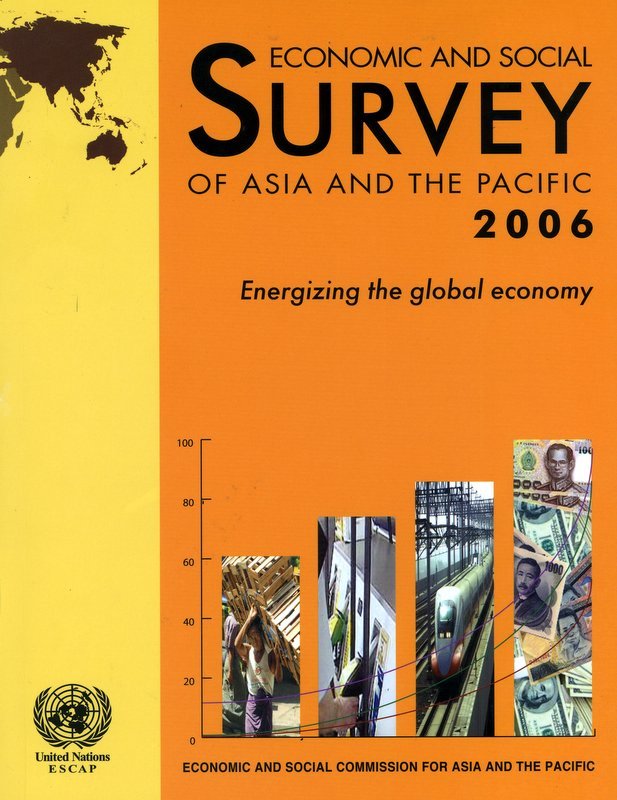
The United Nations has recently urged countries in the Asia Pacific Region plagued with high underemployment rates and limited opportunities for formal sector jobs to emulate the example set by the Philippines by promoting exports of workers “as part of a national development and poverty-reducing strategy.”

In a recent report entitled “Economic and Social Survey of Asia and the Pacific 2006,” the Economic and Social Commission for Asia and the Pacific (Escap) of the United Nations said remittances sent my migrants and temporary workers on contract abroad to their families have greatly helped to raise the standard of living of some of the poorest sections of society in South Asia, South-East Asia, and the Pacific region.

India
, China, and the Philippines are the top recipients of overseas workers remittances in the Asia-Pacific region in 2005, receiving US$21.7 billion, US$21.3 billion, and US$11.6 billion, respectively. As a share of gross domestic product, however, the Philippines tops the rest of the region, as OFW remittances accounts for 13.7 percent of the country’s economy. About one for every ten Filipinos are working abroad either as temporary or permanent migrant workers.

“Liberalization of financial markets has made it easier to remit money from one country to another,” said the UN report. “A surge in the number of bank branches seeking remittance-related business in host countries and providing increased range of financial services has also played an important role. Changes in the skill composition of workers going abroad has further contributed to the higher remittance flows [in] the last two to three years."

In the last few years, critics in the Philippines have been saying that remittances have high social costs in terms of the lack of parental guidance in the OFW family leading to juvenile delinquency, drug dependency among children of OFWs, broken families, among others. The report, however, seems to ignore these issues, focusing instead on remittances’ positive macroeconomic impacts.

“Remittances increase a country’s international credit worthiness and lead to lower borrowing costs,” said the UN report. “Furthermore, remittances tend to be stable and countercyclical, thus smoothing out household consumption and investment patterns during episodes of unemployment and high inflation in home countries.”

The report suggests that remittances at current levels, while rising, tends to be underestimated due to continuing high transactions costs that serves as disincentives to sending money home.

“Fees charged by remittance service providers are very high in comparison to the actual costs incurred in transferring the funds,” said the UN report. “For small transfers, fees can reach as high as 10 to 15 percent of the money sent home. For poor migrant workers, who generally send small sums of money, this has encouraged the growth of informal channels for remittances.”

The report urged governments in the Asia-Pacific region that remittances are “private flows of money” that should not be taxed as these incomes were already taxed from the point of origin. Taxes, the report said, would only discourage the transfer of funds through the formal channels.

“Over the medium-term, investments by sending countries in training to produce workers could create a larger pool of workers who could respond to changing market conditions in the worker-receiving countries,” the UN report said. “Once workers can move beyond unskilled jobs and secure higher paying semi-skilled and skilled jobs, their earnings should rise, enabling them to send more money home.”

Tuesday, April 11, 2006

Political dividends from the expanded value added tax

PORK is pork is pork and is unhealthy to the Philippine economy. Why should it be otherwise?

If we take it from Press Secretary Ignacio Bunye, it’s perfectly alright to pad the proposed 2006 with pork barrel, a product of what he called “EVAT dividend.” He said the government collections from the “reformed” VAT must return to the people in terms of transparent, focused, and optimum spending… As far as I’m concerned, for as long as the process is transparent, and for as long as the benefits [accrue] to the people, then we don’t have any objections."

When has the pork barrel system in this country ever been “transparent” and “optimum”? Try looking at the budget and you will not see any item there explicitly tagged pork barrel, but every member of Congress will tell you without batting an eyelash that the bad political cholesterol is there, buried like needles in a giant haystack and only people like them know where to look. How could it be “optimum” when the basis for allocating those monies is necessarily political and therefore not in accordance with the country’s development plans?

What is alarming is that Bunye is presenting what is essentially a sleazy transaction between Malacañang and the Congress people as an “EVAT dividend.” This is a deception because, in the discussions about the EVAT law, they have been hammering on the people that the law was necessary for “fiscal consolidation.” Now they are using people’s money for their own political expediencies.

“The people’s interest is clearly being prejudiced by the dilly-dallying in the passage of the budget, which may continue to delay the benefits rightfully accruing to the community,” said Bunye. Thus, Malacañang seems to be saying that the additional P4.7 billion pork barrel is necessary to bribe legislators into approving the proposed and much-delayed 2006 budget. Is this the way members of Congress now behave? That they could do legislative work only if their mouths are greased?

But who dilly-dallied for months on end about the proposed budget? It’s Speaker Jose De Venecia, Malacañang’s hatchet man in the House of the Representatives. The government should have submitted the proposed 2006 budget in August, but Speaker de Venecia, apparently at the behest of Malacañang, sat on it for nearly eight months. The House only submitted that heavily-padded or pork-laden budget on the same day the Senate was to hold its last session before adjourning for a 5-week break.

It’s apparent, however, that Malacañang’s efforts to grease the proposed budget through the wheels of Congress is just a smokescreen for the grand design related to Charter change and the political survival of President Arroyo. In an interview with BusinessMirror, Sen. Manuel Villar, the Senate finance committee chief, noted that Malacañang never intended the budget to pass—the design being, so that they would automatically reenact the 2005 budget that would give them the maximum flexibility to use the money as “incentives” to members of Congress and local government executives to dance the Cha-cha. The reenacted budget therefore is one big sleazy pork barrel where every politician could dip his or her hands into, in order to ensure that they would all toe the line. By July, it’s expected that the Opposition will launch another impeachment initiative arising out of the “Hello Garci” controversy, among others, and the one big pork, the reenacted budget, will take care of them.

Meanwhile, as Malacañang and its minions squander the people’s money on Charter change, expect Bunye’s spin machine to continually hit the Senate about “dilly-dallying” on the budget. Given the questionable circumstances by which the budget was crafted, we could expect senators to look carefully into the details, thus forcing a stalemate. That will even trigger Bunye’s spin machine into high gear, blaming the senators for their intransigence. Worse, as Villar himself feared, some proadministration congressmen actually have the cheek to now say that Charter-change opponents should blame the Senate for causing a budget reenactment with their “delays,” thus providing the Executive elbow room to source funds for a Cha-cha plebiscite from the reenacted budget. If the senators would only approve the House-endorsed budget without thinking, goes the congressmen’s logic, then the 2005 budget won’t be reenacted and funds for the plebiscite cannot be easily sourced.

But all this is a virtual smoke-and-mirrors exercise for the real drama which is the Cha-cha and this administration’s political survival.

The greatest tragedy, besides having a politicized budget and having the appropriations process ruined, as Villar complained, is to hold hostage all that scarce resource for the most cynical of purposes. To think that the BIR is being flogged and threatened with lateral attrition to collect every additional peso from the expanded VAT.

It would take a genius of a taxman to explain well why more taxes must be collected so they can be given back as “EVAT dividends”—and why poor blokes like us must believe we can substantially get this back if they pass through our congressmen.