Friends, I have transferred this blog to Wordpress. Blogger.com has been good to me but i realized there are features in Wordpress that I badly need (eg categories, page, etc). I also have problems with my feeds and I've been asking Blogger.com about it but to no avail. It seems Blogger is just too successful to attend to my stupid, trivial queries. So, to friends and bloggers out there who like this blog, to those who have linked me up, I would appreciate if you update your links on me using this address: www.davellorito111.wordpress.com.
Thanks a lot and hope you continue reading my blog.
dave
Tuesday, April 25, 2006


Malacañang flip-flops on EVAT
WE thought all along that Malacañang badly wanted the EVAT implemented to address the budget deficit and balance the budget by 2008. That is why, against widespread protests, the government raised the value added tax on many products including petroleum from 10 to 12 percent, and expanded its coverage to other products that were not previously covered.
When the Supreme Court finally the lifted temporary restraining order that delayed EVAT’s implementation, Malacañang rejoiced, telling the people that the country could now achieve fiscal consolidation, and that soon the sovereign rating agencies including Fitch and Moody’s are going to get nicer with us, thus enabling the country and its entrepreneurs access to cheaper money for economic expansion.
That is why we were surprised by the recent announcement by no less than presidential chief of staff Michael Defensor saying Malacañang might recommend to Congress the suspension of the coverage of the EVAT law on petroleum products, supposedly to help cushion the impact of rising crude prices on goods and services. Defensor even dared Congress to legislate the EVAT amendment on its own without any prodding from the Palace if it believes in the urgency of the measure.
“The Senate can see that the ones to be most affected by this issue are the people so they would surely cooperate,” said Defensor to Palace reporters. “This is not for the President but for the people.”
Why the sudden of heart? How come, all of a sudden it’s Palace officials who are so hell-bent on reversing hard fought reform measure? Why is Malacañang leading the way for policy backsliding?
Certainly, the proposal looks politically attractive but its definitely ridiculous when viewed from economic and governance perspectives. Suspending VAT coverage of petroleum products means we may have to kiss goodbye the objective of consolidating the country’s finances. The initial estimate says the country will forgo collection of at least P20 billion a year, translating in the continuing lack of investments in economic and social infrastructure that is needed for economic takeoff. Albay Rep. Joey Salceda said the government could compensate for the losses by selling more government assets, but we know that this process takes forever to yield money for the government.
The proposed suspension really doesn’t make sense because its impact will only be temporary. Movements of crude prices in the world market are determined by a host of factors beyond Malacañang’s control (e.g. rising demand from
Common sense dictates that the best measure to deal with volatile crude prices is to allow fuel prices to rise to market levels. This is painful but sensible, as real prices necessarily drive fuel consumption. When prices are high, the sensible thing to do is reduce consumption and this could be achieved through old-fashioned energy conservation measures, including the traffic demand management measures. In fact, allowing market forces alone to determine prices would force people to modify their behavior in order to conserve energy. Of course, this policy should be complemented by other means, including encouraging private investments in alternative energy sources (ethanol, biodiesel, natural gas, wind, among others).
It’s apparent that the proposal to suspend EVAT coverage of petroleum products is really all about making political scores—a fair assumption, seeing the recent spate of populist policy announcements. Palace officials were not bothered by one AFP area commander’s reported remarks about issuing shoot-to-kill orders for suspected military rebels. And yet, just a few days before, the President announced the commutation of death sentences of rapists, murderers, and terrorists. Sensing that it was a popular move, Malacañang announced it will work for repeal of the death penalty law.
Early last year, Malacañang told the world the debate on the mining law was over after the Supreme Court ruled with finality that the Mining Act is constitutional. After that, the government and the private sector sent delegates on a roadshow abroad to tell foreign business the
Policy flip-flops are sometimes seen as signs of either a sincere change of mind, a lack of political will, or plain cluelessness. Yet they could also indicate cynical politics at work.
Saturday, April 22, 2006
Charter change on a chartered train
THE D-day is to fall on July 2006. By this time, the
Wednesday, April 19, 2006
Where might public opinion go on charter change?
THE credibility and trustworthiness of advocates for or against Charter change will matter in the Filipino people’s decision should there be a plebiscite on the governments proposal to change the Constitution, a political analyst from Pulse Asia said Tuesday.
Tuesday, April 18, 2006
Jobless growth
THE
Sunday, April 16, 2006
UN says job scarce countries should emulate the Philippines
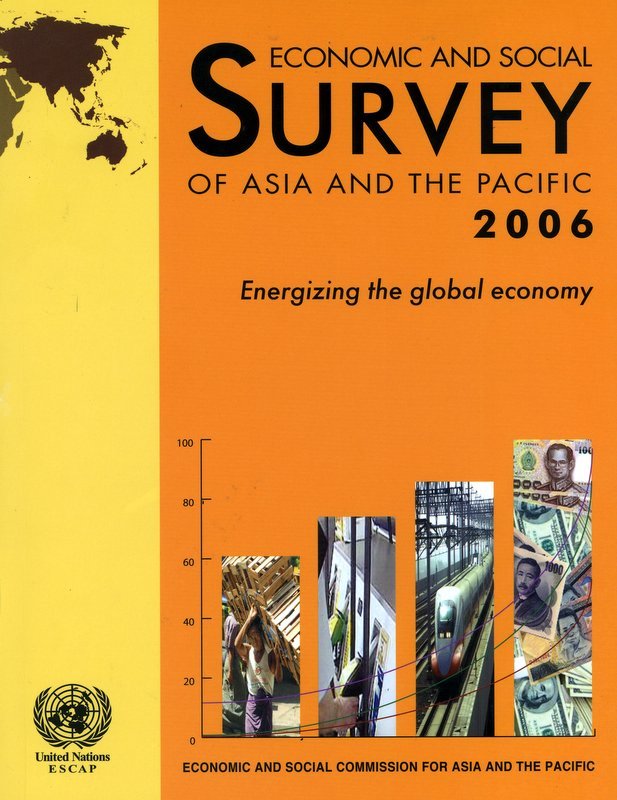 The United Nations has recently urged countries in the Asia Pacific Region plagued with high underemployment rates and limited opportunities for formal sector jobs to emulate the example set by the
 In a recent report entitled “Economic and Social Survey of Asia and the Pacific 2006,” the Economic and Social Commission for Asia and the Pacific (Escap) of the United Nations said remittances sent my migrants and temporary workers on contract abroad to their families have greatly helped to raise the standard of living of some of the poorest sections of society in South Asia, South-East Asia, and the Pacific region.
India
“Liberalization of financial markets has made it easier to remit money from one country to another,” said the UN report. “A surge in the number of bank branches seeking remittance-related business in host countries and providing increased range of financial services has also played an important role. Changes in the skill composition of workers going abroad has further contributed to the higher remittance flows [in] the last two to three years."
In the last few years, critics in the
“Remittances increase a country’s international credit worthiness and lead to lower borrowing costs,” said the UN report. “Furthermore, remittances tend to be stable and countercyclical, thus smoothing out household consumption and investment patterns during episodes of unemployment and high inflation in home countries.”
The report suggests that remittances at current levels, while rising, tends to be underestimated due to continuing high transactions costs that serves as disincentives to sending money home.
“Fees charged by remittance service providers are very high in comparison to the actual costs incurred in transferring the funds,” said the UN report. “For small transfers, fees can reach as high as 10 to 15 percent of the money sent home. For poor migrant workers, who generally send small sums of money, this has encouraged the growth of informal channels for remittances.”
The report urged governments in the Asia-Pacific region that remittances are “private flows of money” that should not be taxed as these incomes were already taxed from the point of origin. Taxes, the report said, would only discourage the transfer of funds through the formal channels.
“Over the medium-term, investments by sending countries in training to produce workers could create a larger pool of workers who could respond to changing market conditions in the worker-receiving countries,” the UN report said. “Once workers can move beyond unskilled jobs and secure higher paying semi-skilled and skilled jobs, their earnings should rise, enabling them to send more money home.”
Tuesday, April 11, 2006
Political dividends from the expanded value added tax
PORK is pork is pork and is unhealthy to the Philippine economy. Why should it be otherwise?
It’s apparent, however, that Malacañang’s efforts to grease the proposed budget through the wheels of Congress is just a smokescreen for the grand design related to Charter change and the political survival of President Arroyo. In an interview with BusinessMirror, Sen. Manuel Villar, the Senate finance committee chief, noted that Malacañang never intended the budget to pass—the design being, so that they would automatically reenact the 2005 budget that would give them the maximum flexibility to use the money as “incentives” to members of Congress and local government executives to dance the Cha-cha. The reenacted budget therefore is one big sleazy pork barrel where every politician could dip his or her hands into, in order to ensure that they would all toe the line. By July, it’s expected that the Opposition will launch another impeachment initiative arising out of the “Hello Garci” controversy, among others, and the one big pork, the reenacted budget, will take care of them.
But all this is a virtual smoke-and-mirrors exercise for the real drama which is the Cha-cha and this administration’s political survival.
Monday, April 10, 2006
Leftists should leave call centers alone!
Recently, KMU, a leftist “labor” organization criticized call centers as a hub of exploitation, stressing that local labor is just a small fraction of what local call center agents get in the
If there are people who should complain about “call center exploitation” it should be the call center agents themselves, and not the KMU. These people are smart and tech-savvy; they have all the avenues for their grievances. They could always post their complaints in web fora and web logs but try surfing about “call center exploitation” and you can’t find one entry. Well there are the usual rantings about call center life but these people know they could always leave and find life elsewhere. If they don’t like their work environment, they could always get another outsourcing job and they don’t need labor unions to represent them. Yes, workers in call centers are empowered. Call centers in fact pay them before they start working or even during their training stage, and they get more benefits including night differentials, rice allowances, and performances bonuses. Yes, the call centers actually do all they can to retain staff knowing that agents could always find another job somewhere.
Given its socialist, nay communist, ideology, KMU necessarily longs for a socialist smokestack utopia that no longer exists (not even in
Sunday, April 09, 2006
The devil's budgeting system in the Philippines
Don’t you wonder why
Tuesday, April 04, 2006
Getting intoxicated with call centers?
 THE graduation season is here again and fresh graduates—400,000 of them—are probably now wondering whether or not there’s a place for them in the country’s job market. If one is reading the newspapers, especially the weekend editions, it would appear that there are indeed fresh opportunities for them: call centers and outsourcing companies. Of course, there are always overseas jobs for skills that are in demand abroad (e.g. teachers, caregivers, pilots, mechanics, geologists, among others).
On the part of policy makers the big question should be: Would call centers and related industries that are “globalized,” overseas employment, actually solve the problem of joblessness in the country? It’s high time that policy makers ponder this because it appears that the hype created by this emerging industry and its supposed benefits to the economy seems to have lulled the government into complacency. Since the passage of the reformed VAT for instance, the government seemed to have totally lost the appetite for real reforms.
Wednesday, March 29, 2006
"Life is a Bell Curve": My new personal site at Multiply.com
Friends: I opened a new account at Multiply.com for my personal musings ("Life is a Bell Curve"). The site contains a personal blog ("All Seasons"), photos, reviews, music, and video. (I dont have postings on music and video yet). In fact, you can open your own free account and we could form our own network there. This account WITHOUT BORDERS will remain as my "think blog" and will continue to have the same content. You may click below to visit my new personal site:
http://davellorito.multiply.com/
I'll be transferring all my book reviews, movie reviews, and photos there as well. You are all welcome to visit and post comments. Thanks.
http://davellorito.multiply.com/
I'll be transferring all my book reviews, movie reviews, and photos there as well. You are all welcome to visit and post comments. Thanks.
Market Center debut: What does it mean for print media?
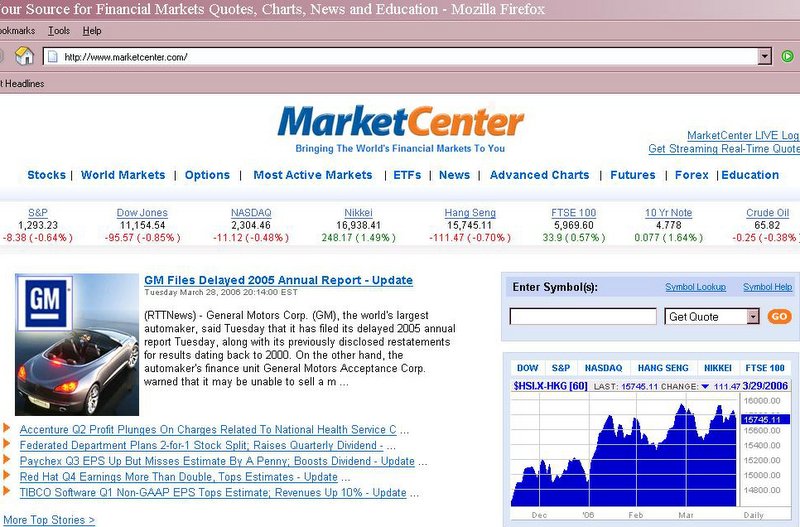 Anybody out there who has read the Financial Times today may have seen the full spread advertisement of Market Center offering up-to-date global financial information. I immediately checked its website and was amazed at the amount of data available free of charge. Free worldwide quotes. Free charts with multiple studies. Market coverage on stocks, futures, and forex. S&P, Dow Jones, Nasdaq, Nikkei, Hang Seng, FTSE—they are all there. Yes, free of charge!
Monday, March 27, 2006
Hope renewed for Philippine biofuels industry
 COULD the country’s political combatants pause for a moment and move quickly to consolidate the bills promoting biofuels in the country?
 Sunday, March 26, 2006
Is China a threat or an opportunity?
 Is
Is Thursday, March 23, 2006
“Offshore Nation” and the myths about services globalization
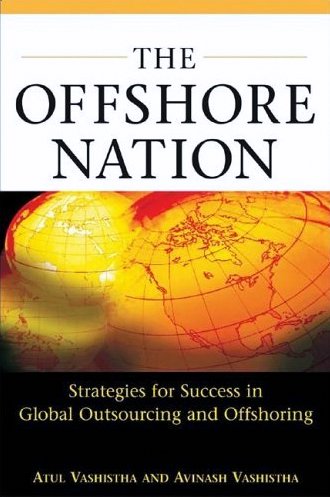 This book Offshore Nation: Strategies for Success in Global Outsourcing and Offshoring (McGraw-Hill, 2006) written by Atul and Avinash Vashistha is a must read for all those who want to maximize the benefits of business process outsourcing. As an avid observer of this emerging industry in the
 Myth 1: that services globalization adds risk to business organizations. Not true, says the authors. “Offshoring can actually reduce the risk … by reducing your cost structure and diversifying your supply base to economies that are removed from the fluctuations of your home country economy and your core markets, and by providing access to a much larger labor pool.”
Myth 2: Offshore suppliers use slave labor. Reality: “The workforce is generally from the middle or even upper-middle classes of their respective countries… The delivery facilities in countries such as
Myth 3: The infrastructure is poor at offshore centers. Reality: “The IT parks in India, the Philippines, China, Hungary, Mexico, Ireland and other big offshoring locales rival those of Silicon Valley in terms of telecommunications, power generation and other infrastructure—and in many cases exceed them,” says the book.
This book’s quotation on Ernest Cu of SPI Technologies engaged in various outsourcing activities (eg. content editorial, production and electronic delivery; medical transcription; legal transcription; content aggregation; among others) here in
“One potential client came to us with some graphic needs and asked if our capacity can handle it? We have 35 g-series Macs, high-end four-color scanners, and handle at least 20,000 graphics a month. Can we handle it? I told him we can handle 10 times that.”
Outsourcing unaffected by Manila's political noise
 My impression was that the State of
 “There was minimal impact…,” said NeoIT, in its recent report entitled Philippines: Impact of Current Political Developments on Offshore Outsourcing Industry. “Service delivery has been unaffected by these protest rallies… Power companies and telco providers continued to provide uninterrupted service throughout the country. Airports and seaports experienced normal operations as well.”
neoIT also said expansion plans of existing service providers are pushing through. Specifically, the operations of the ICT group in
Wednesday, March 22, 2006
Yahoo's booboo: Now i know why editors still have their places under the sun!
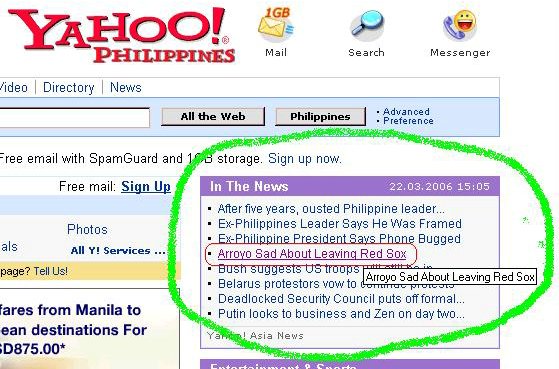
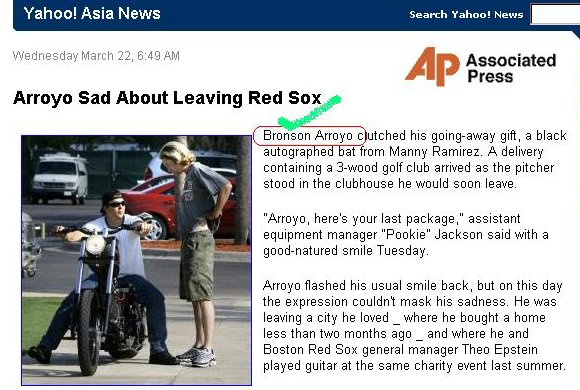 The story "Arroyo sad about leaving Red Sox" in the March 22 edition of Yahoo Philippines (yes, the Philippines is interesting enough to merit a separate Yahoo page!) seems to tell us that President Gloria Macapagal Arroyo is in some way connected with the Red Sox, an American baseball team. Or is she a former fan of the Red Sox? Try clicking the headline and you will know that the story is not about President Arroyo but Bronson Arroyo, a baseball player, who is transferring to another team. Why this booboo? It's apparent that the one choosing the stories for Yahoo Philippines is a machine, a computer. My conclusion? Human editors are not yet obsolete, contrary to some observations that the journalism profession is going down the way of the dinosaurs. The machine simply doesn't have the subtle sensitivity to distinguish between Gloria the president and Bronson the baseball player. It's nice to know that we journalists still have our own place under the sun. For how long?
Tuesday, March 21, 2006
Restricting skilled labor migration is absurd!
SUMMARY: “Labor is just like capital in a free market place. Investors will take their money to where it will get the best return. Workers will take their skill to where it will get the greatest reward… Thus the proposal that government ought to ban or in any way restrict the migration of aviators and aircraft mechanics is simply absurd and ridiculous,” says former Senator Ernesto Herrera. Please read the entire post.
It’s nice to know former senator Ernesto Herrera has taken the cudgels for overseas Filipino workers who are likely to be hit by the proposed travel ban or moratorium on skilled Filipino workers. In the recent employment summit, the Department of Labor and Employment (Dole) and the Philippine Overseas Employment Administration are contemplating of said measures supposedly in the name of “national interest” and “public welfare.” Senator Herrera calls these proposed policy “ridiculous” stressing that government “cannot effectively prevent Filipino pilots and aircraft maintenance engineers from leaving the country, should they decide to seek greener pastures abroad.”
Take the case of the International Container Terminal Services, Inc (ICTSI), a Filipino global ports management company. ICTSI operates a lot of ports here in the
There are a thousand and one ways to retain staff without resorting to coercive measures. The fear that only journalists will remain in this country if we open the floodgates to overseas jobs is understandable. The latest statistics say the current number mining engineers, geologists, and geodetic engineers would not be enough meet the demand for these skills in the next four years. The Dole blamed low labor supply on few tertiary schools offering said discipline and even fewer students who passed the board examinations. The reason for this trend is that in the last several decades, mining (prior to the Mining Act of 1995) were stagnant for lack of fresh investments. It’s only after the Supreme Court declared the constitutionality of the Mining Act that allows 100 foreign equity ownership (through the financial and technical assistance agreement) when the mining industry has started to hire more skilled professionals. Give it a few more years and soon smart kids will flock into this profession.
Ask Professor Eduardo Morato of the Asian Institute of Management about skilled labor migration and he will tell you that the real problem lies with local capitalists. Citing a recent survey by AIM in tandem with the Switzerland-based
Monday, March 20, 2006
Skilled Filipino workers of the world unite!
Government is thinking of employing coercive means to restrict OFW’s freedom to work abroad. Please read the rest of the post.
Government contemplates restrictions on overseas deployment of workers from "critical industries"
Sunday, March 19, 2006
Terrorists as heroes
 "People should not be afraid of their governments. Governments should be afraid of their people," says V (played by Hugo Weaving) in the film "V for Vendetta" (Warner Brothers), apparently paraphrasing political philoshoper John Locke. More so if such government has wronged the likes of V who is lethal with both the blade and the bomb.
Please see my full review of the film V for Vendetta in Without Borders: Films and Books.
Subscribe to:
Posts (Atom)